

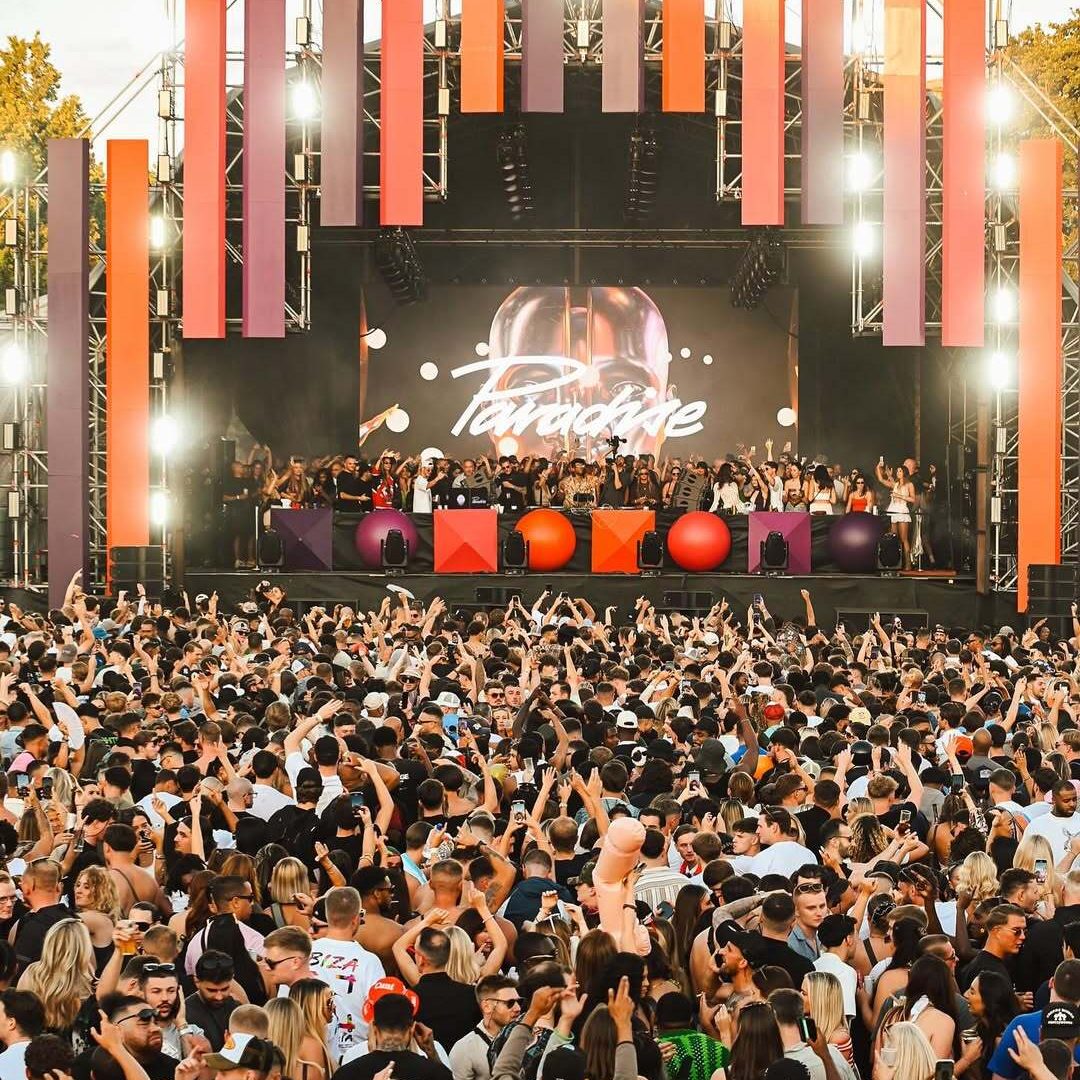
Last summer I had the chance to be the VJ on the main stage at Paradise in the City — the first UK open-air festival from Paradise, the brand rooted in Ibiza and championed by Jamie Jones. What was billed as an Ibiza-level experience landed at Boston Manor Park, West London, on 2 August 2025, and it delivered on its promise of a fully immersive, four-stage house and techno affair.
The setup was expansive. The park was reimagined into four distinct performance spaces — each with its own identity and energy — from wide-open Main Stage vistas to more intimate forested and underpass environments. Over 25 selectors, including established names and rising talents, were placed across those stages, hand-picked by Jamie and his team.
Working the Main Stage
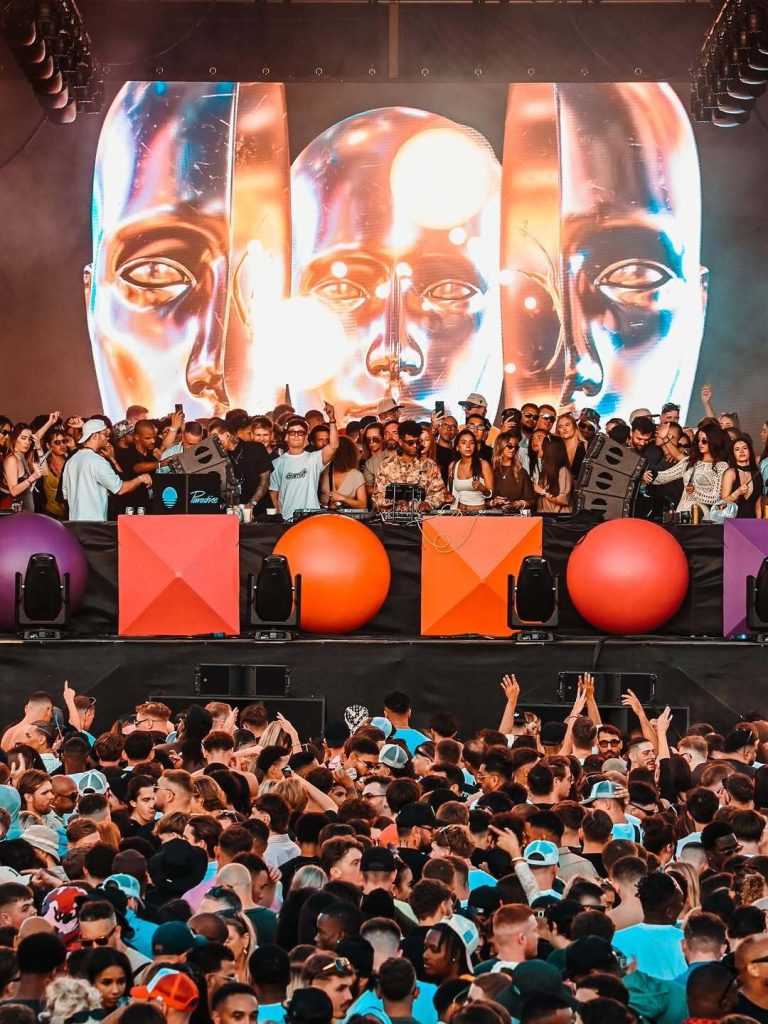
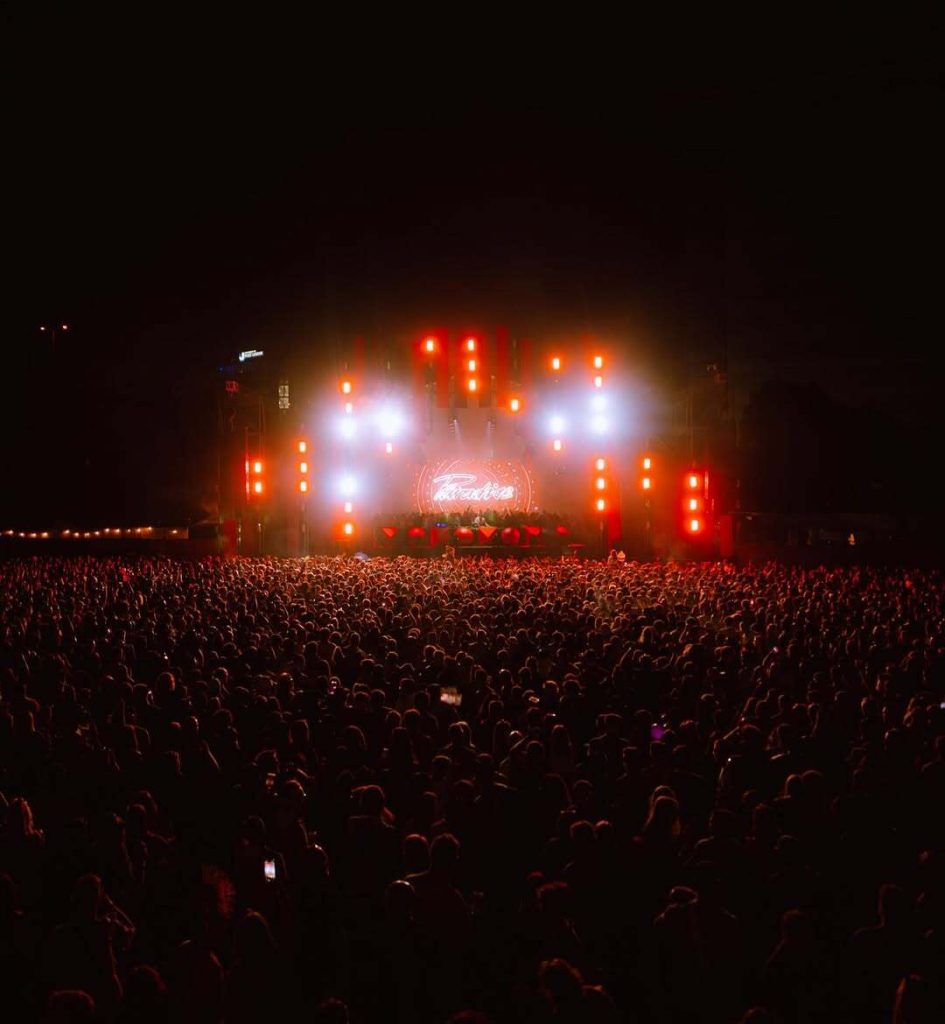
My role on the main stage VJ set was to create visuals that sat behind the music but also pushed the energy forward. It was about rhythm and texture — choosing movement, colour and rhythm that enhanced the sound without overwhelming it. The crowd weren’t just watching; they were present, and that changes how you programme content. Photographic visuals, kinetic patterns and structural animation all played into the beats, layered across high-end production that LWE delivered throughout the site.
The vibe across the day was dynamic. Early on, groove-led sets eased people into the park’s rhythm, and by peak hours the crowd had settled into a rhythm that felt collective — not just a festival audience, but a network of dancers locked into the same music and space. You could see it in people’s movement, in how they threaded between stages, in how they reacted when Jamie dropped deeper, analogue-leaning tracks during his sets.
A Visual Narrative for the Day
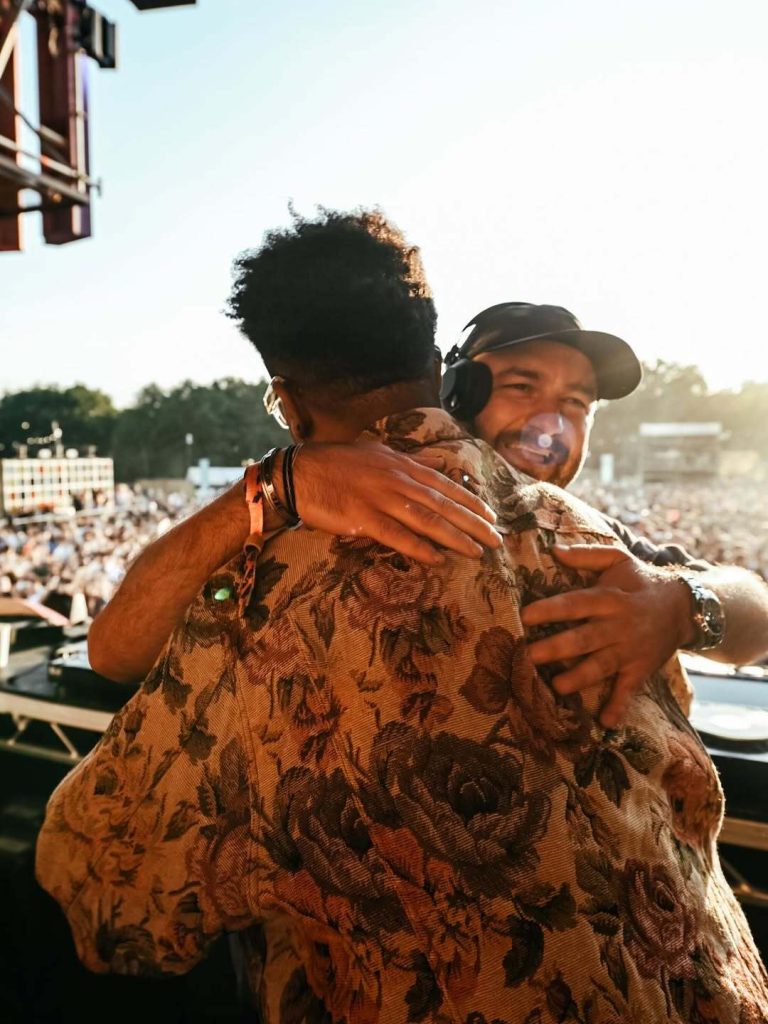
Working visuals for dance music means thinking beyond clips and loops — it means building a narrative that moves with the set. Over hours of programming, you pivot from light and spacious to punchy and hypnotic. At Paradise in the City this was mirrored by the festival’s own arc: from sunny builds to sunset peaks and the heavier, night-leaning textures as the schedules tightened.
What stood out most to me was how people responded to visuals in the space. They weren’t staring at screens, they were immersed — the projection was part of the environment rather than an add-on.
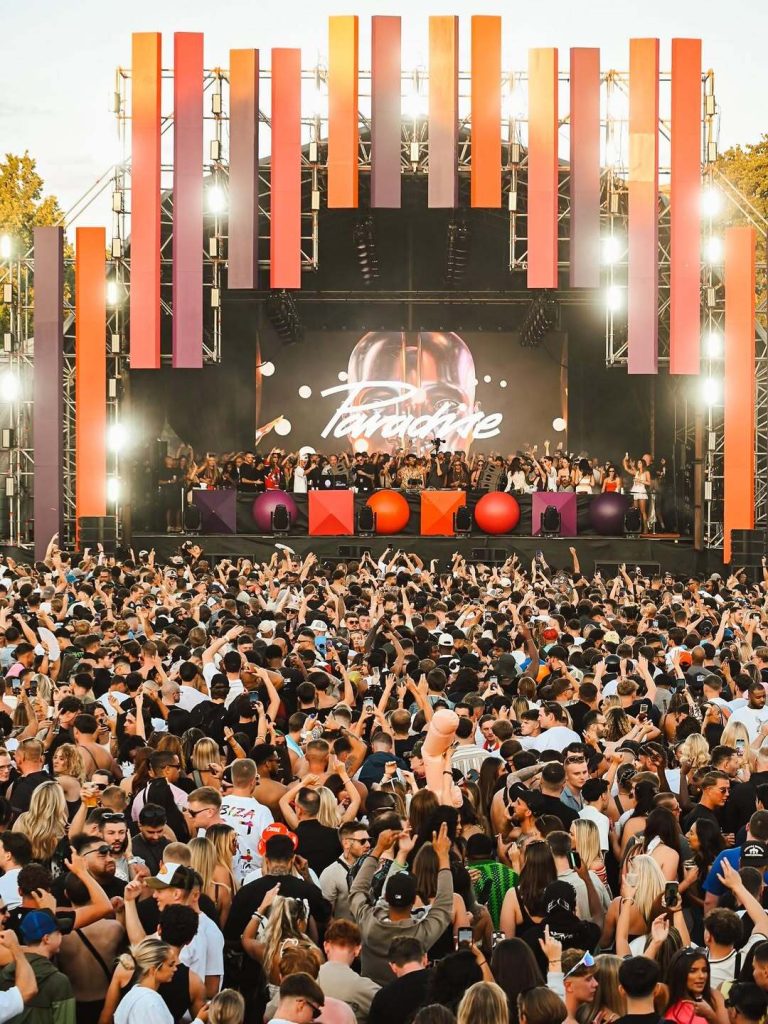
Night Time – Jamie Jones Headline Slot
Seeing thousands of people behave like a collective — present on the dancefloor rather than behind phones or recording devices — shaped my experience more than any headline set. It felt like an event tailored to being in the moment, and that’s not something every festival captures.
From a technical and creative perspective, the day reinforced how much physical context matters. Outdoor environments change how visuals are perceived; visuals aren’t just seen, they’re felt in proximity to sound and crowd movement. That made programming for the main stage both a challenge and a privilege.
Final Thoughts
Paradise in the City wasn’t just another festival stop — it was a statement about how a dance music brand can translate its identity into a large-format event without losing nuance. For me, being the main stage VJ was an intense day of problem-solving, visual storytelling and live creative adjustment. It also reminded me why I first got into VJ work in the first place: to add dimension to sound, to sync the visual pulse with the musical one, and to contribute to moments that stick with people long after the last track fades.